Gold Hits a Million: A New Era for the World's Oldest Currency
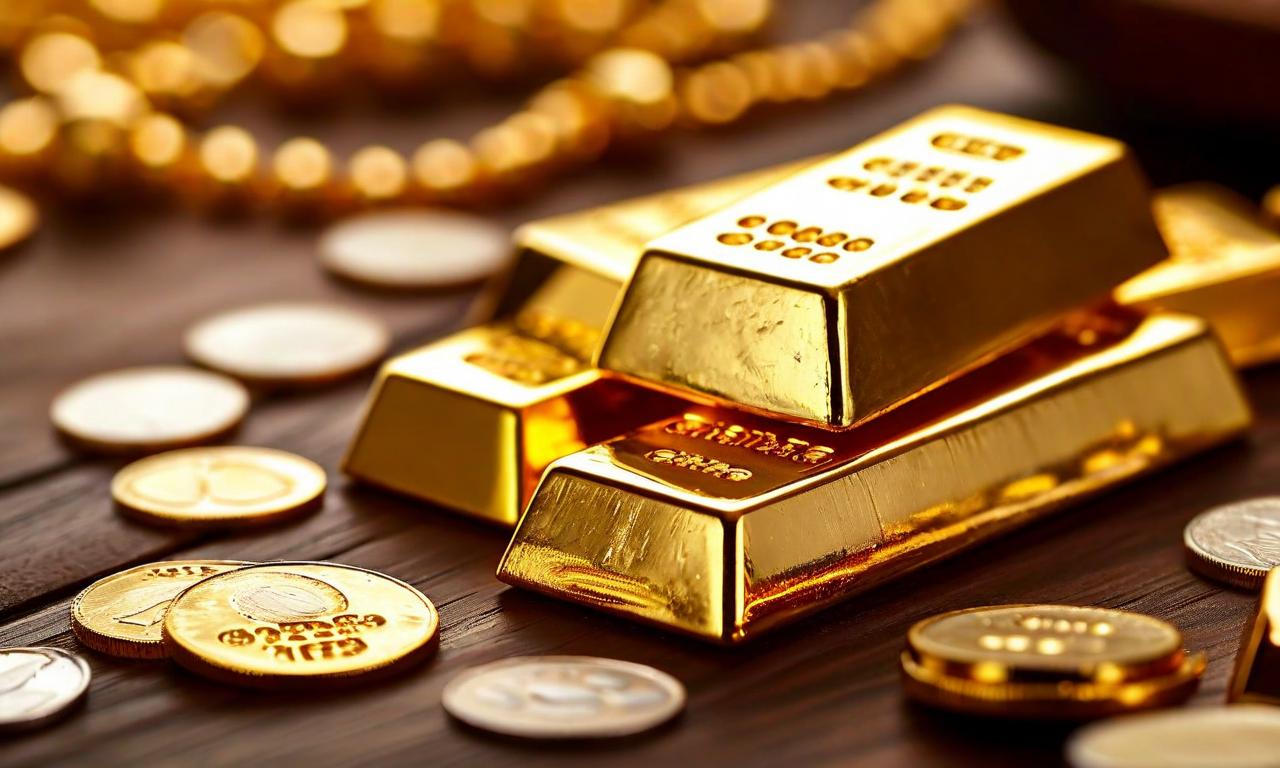
The financial world recently marked a momentous occasion: a single 400-ounce gold bar officially hit the million gold dollar valuation. This isn't merely a headline-grabbing figure; it's a profound indicator of shifting global economic landscapes, reflecting a dramatic decline in the purchasing power of the US dollar over the past five decades. On August 16, 2024, precisely 53 years and one day after the United States irrevocably severed the dollar's convertibility to gold, this precious metal reached a symbolic benchmark that many financial analysts, including Egon von Greyerz, founder of VON GREYERZ AG, had long predicted as inevitable.
This milestone isn't a testament to gold becoming 71 times more valuable since 1971. Instead, it serves as a stark reminder of the dollar's staggering 98.5% collapse in real terms against gold. It highlights a critical truth for investors and ordinary citizens alike: while traditional currencies can lose significant value over time, gold has consistently maintained its purchasing power, often thriving amidst economic uncertainty. This fundamental characteristic also underpins a darker side of the gold market, as evidenced by the recent disappearance of millions worth of gold into illicit channels.
The Dollar's Diminishing Returns: A 98.5% Collapse Since 1971
To truly understand the significance of a million gold bar, we must revisit a pivotal moment in financial history: August 15, 1971. On this day, President Richard Nixon announced the temporary suspension of the dollar's convertibility into gold, effectively ending the Bretton Woods system. What began as a temporary measure became permanent, transitioning the global financial system from a gold-backed standard to one based on fiat currency. This meant the dollar was no longer tethered to a physical commodity; its value would henceforth be backed solely by the faith and credit of the U.S. government.
The Unpegging and its Aftermath
Prior to 1971, the dollar's value was fixed to gold at $35 per ounce. This provided a natural constraint on government spending and currency printing. Once the "gold window" closed, central banks gained unprecedented freedom to expand the money supply. Over the subsequent 53 years, factors such as inflation, increased government debt, and expansive monetary policies (including quantitative easing) have systematically eroded the dollar's purchasing power.
Consider the staggering contrast: In 1971, a 400-ounce gold bar was valued at approximately $14,000. Today, that same bar commands $1 million. If you had invested $14,000 in a traditional savings account in 1971, even with an average 4% annual interest, that sum would only amount to around $116,000 today. This pales in comparison to the million gold dollars generated by the same initial investment in physical gold. This demonstrates not an exponential rise in gold's intrinsic value, but rather the dramatic depreciation of the dollar itself.
Understanding Purchasing Power
The 98.5% collapse of the dollar's purchasing power means that what $1 could buy in 1971 now requires roughly $67 (or more, depending on the specific goods or services) today. This silent tax, often referred to as inflation, disproportionately affects savers and those on fixed incomes. Gold, historically seen as a hedge against inflation, has consistently demonstrated its ability to retain value across generations, proving its mettle as real money in an era of ever-expanding fiat currency.
A Real-World Consequence: The $10 Million Gold Scandal in Zimbabwe
The inherent and enduring value of gold, as starkly highlighted by the million gold milestone, also fuels a pervasive shadow economy. A recent and compelling example is the massive gold smuggling operation uncovered in Zimbabwe. Confidential documents obtained by Check Point Investigations reveal that at least 120 kilograms of gold, valued at over US$10 million, have vanished into the black market from Kwekwe’s Silobela gold belt.
This industrial-scale leakage, described by investigators as "one of the largest private-sector gold leakages in Zimbabwe’s modern history," shines a light on the illicit trade driven by gold's universal demand. A powerful syndicate, fronted by Podhill (Pvt) Ltd, allegedly orchestrated a sophisticated scheme involving under-declaration of production, off-record smelting, and direct smuggling to foreign buyers in Dubai and China. Despite internal logs showing thousands of kilograms of ore processed monthly, Podhill declared less than 4kg of gold for official banking in 2024. This stark disparity alone speaks volumes about the extent of the illicit operations.
Anatomy of a Smuggling Operation
The scheme, allegedly masterminded by Chinese national Mr. Zuo Wenzhong and Australian businessman Mr. Moham Karim, involved a network of associates. For instance, in December 2024, Podhill’s carbon processing line reportedly extracted close to 1.5kg of gold per batch, generating over US$16,000 per transaction, yet only a fraction (300 grammes) was officially submitted. Highly pure amalgam batches were sold privately at US$70 per gramme through unregistered foreign-linked buyers, completely bypassing tax authorities and the Reserve Bank of Zimbabwe.
Internal criminal dossiers expose a chilling level of calculated deception, detailing instructions to workers to “smelt quietly” and move gold “without record.” By early 2025, the syndicate’s undeclared exports had soared past 120kg, effectively turning their Ourstrike Mine into a front for industrial-scale smuggling. This "ghost refinery network" relied on cash transactions, private air cargo, and discreet couriers, creating an invisible artery for Zimbabwe's precious resources to flow out of the country undetected. The full investigation by the Zimbabwe Republic Police Minerals and Border Control Unit highlights the severe economic and legal repercussions of such large-scale illicit activities. For more details on this intricate web of deceit, refer to Zimbabwe's $10 Million Gold Scandal: Unmasking the Syndicate.
Why Gold Continues to Shine: Protection in Uncertain Times
The parallel narratives of gold reaching a million gold dollars and the ongoing multi-million dollar smuggling scandals underscore gold's dual role in the global economy. On one hand, it is a proven hedge against currency devaluation and economic instability, offering a tangible store of wealth when fiat currencies falter. On the other, its high value and easy liquidity make it a prime target for illicit activities, especially in regions rich in natural resources but challenged by governance issues.
Gold's appeal stems from its finite supply, intrinsic value, and universal acceptance. Unlike paper money, it cannot be printed into existence by central banks, making it a reliable barometer of real purchasing power. In an increasingly volatile world, marked by geopolitical tensions, escalating national debts, and the ever-present threat of inflation, gold continues to be viewed by many as the ultimate safe haven asset.
Navigating the Future: Tips for Gold Investors
For individuals and institutional investors looking to safeguard their wealth, understanding gold's role is crucial. Here are some actionable insights:
- Diversify Your Portfolio: Gold should be considered as a component of a diversified investment strategy, typically accounting for 5-15% of a portfolio to act as a hedge against market downturns and inflation.
- Choose Your Investment Vehicle Wisely:
- Physical Gold: For those prioritizing tangible assets, owning physical gold (coins, bars) stored securely is an option.
- Gold ETFs (Exchange Traded Funds): These allow investors to gain exposure to gold price movements without holding the physical metal.
- Gold Mining Stocks: Investing in companies that mine gold can offer leverage to rising gold prices, but also carries equity market risk.
- Understand the Macroeconomic Landscape: Keep an eye on inflation rates, interest rate policies, and geopolitical events. These factors significantly influence gold prices.
- Long-Term Perspective: Gold is primarily a long-term store of value. Short-term price fluctuations are common, but its long-term trend often reflects the erosion of fiat currency purchasing power.
Conclusion
The attainment of the million gold dollar mark for a 400-ounce bar is more than just a numerical milestone; it's a powerful statement about the enduring resilience of gold versus the persistent depreciation of fiat currencies like the dollar. Since 1971, the dollar's purchasing power has eroded by a shocking 98.5%, silently diminishing the wealth of those holding traditional currency. This historic collapse underscores gold's role as a vital hedge against inflation and economic uncertainty. Simultaneously, the multi-million dollar gold smuggling scandal in Zimbabwe serves as a stark reminder of gold's profound real-world value, driving both legitimate investment and widespread illicit activity. As we navigate an increasingly complex global financial landscape, gold continues to shine as an indispensable asset, offering a tangible store of value in an ever-changing world.